Palace of Holyroodhouse
Audio guide in English
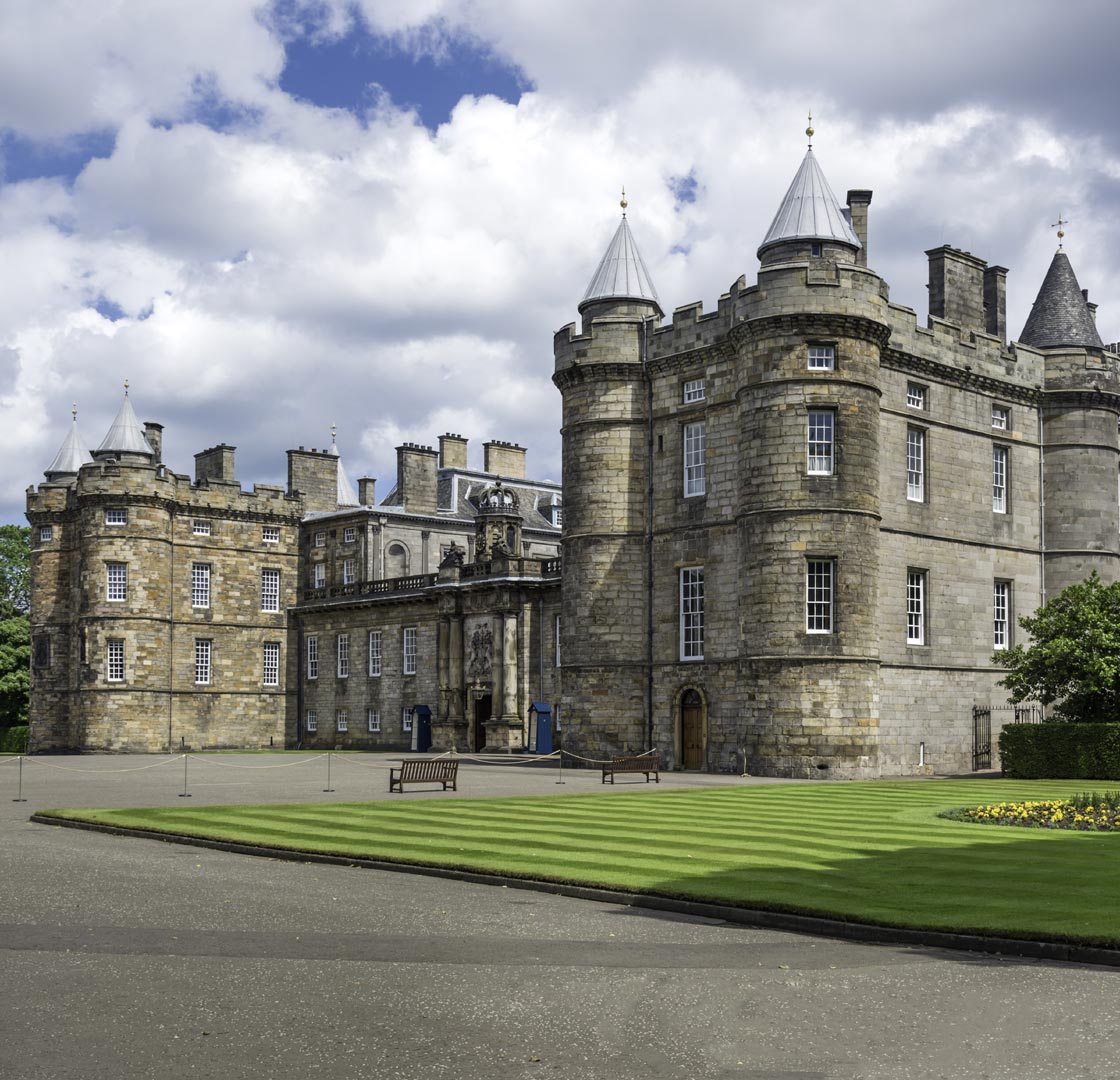
Holyrood Palace is located in Edinburgh, Scotland, at the bottom of the Royal Mile, the main thoroughfare connecting Holyrood Palace to Edinburgh Castle.
Originally a monastery founded by King David I of Scotland in 1128, it has served as the principal residence of the Kings and Queens of Scotland since the 15th century, as well as for all British monarchs during their official visits to Scotland.
In the 15th century, a guesthouse occupied the site where the northern part of the palace now stands. Many Scottish kings stayed here before the palace was built; by the end of the 15th century, Holyrood was a royal residence in name only. James II was born there in 1430, was crowned there, married there, and is buried there. Between 1498 and 1501, James IV had a new building constructed, and Holyrood became a palace in the truest sense of the word.
James V of Scotland made additions between 1528 and 1536, including the northwest tower, which is still standing today. It was in this tower that the apartments occupied by Mary Stuart were located.
The wooden ceilings in the main rooms date from the time of Mary Stuart, and the monograms MR (Maria Regina) and IR (Jacobus rex) refer to Mary and her son, James VI of Scotland. The shields commemorating the marriage of Mary Stuart and King Francis II of France are believed to have been carved in 1559, but placed in their current positions in 1617.
Once James VI became King of Scotland and England in 1603, the palace ceased to be the permanent seat of the royal court. James VI visited the palace once more in 1617, as did Charles I when he came to be crowned King of Scotland at Holyrood Abbey.
In 1650, the palace burned down when Oliver Cromwell's troops were quartered there. The palace's current form dates from 1671 and 1679, a period of renovations undertaken by Charles II and William Bruce.
After the French Revolution, George III allowed Louis XVI's younger brother, the Count of Artois, the future Charles X, to live at Holyrood. The French royal family returned to the palace during their second exile, from 1830 to 1832, before settling in Austria.
Holyrood Abbey
The ruins of Holyrood Abbey are the oldest and most romantic feature of the palace.
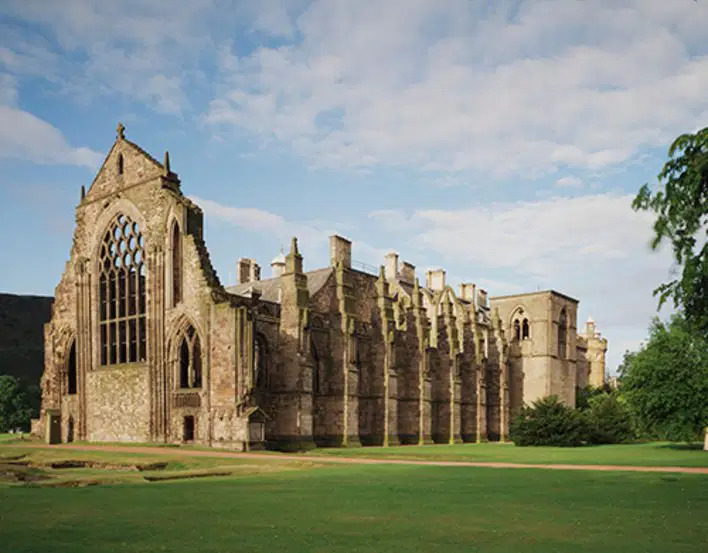
The abbey was the site of numerous royal funerals and burials, primarily in the eastern bay of the south wing, known as the "Royal Crypt." Among those buried here are:
David II of Scotland, in 1371;
James II of Scotland, in 1460;
Arthur, Duke of Rothesay, second son of James IV, in 1510;
James V of Scotland (1542), third son of James IV, buried with his first wife,
Madeleine of France (1537), and their children James, Duke of Rothesay (1541) and Arthur, Duke of Albany (1541)
Henry Stuart (Lord Darnley), son-in-law of James V, in 1567;
Margaret, second daughter of James VI, in 1600.
Dunbar Douglas, Earl of Selkirk (1799), is also buried here.