The Plaza de Espana
Audio guide in English
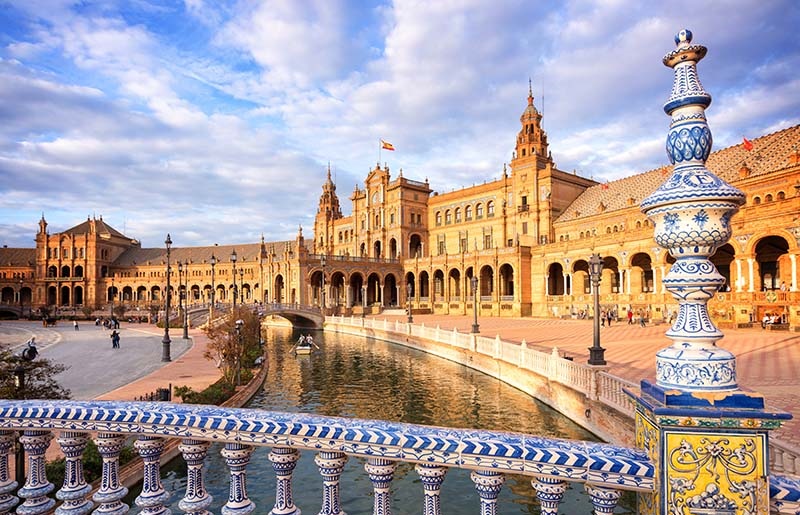
It was designed for the 1929 Ibero-American Exposition by the local architect Aníbal González. He began construction in 1914. After González resigned in 1926, construction was taken over by Pedro Sánchez Núñez under the direction of Vicente Traver. A thousand men participated in its construction, which was completed in 1928. It was the most expensive building of the exposition.
The Plaza de España is a semicircle, surrounded by a row of buildings that are now mostly used for government offices. Two tall towers stand on either side. The most exceptional feature of this plaza is the collection of 52 mosaic-tiled benches located at the base of the Plaza España building. These 52 murals represent the 52 Spanish provinces. The tiles, called azulejos, are typical of Andalusia. Spanish tourists love having their picture taken in Seville in front of their own province.
In addition, the large fountain in the middle of the square and the circular canal with its many charming bridges are also eye-catching. You can even rent a boat and cruise along the canals.